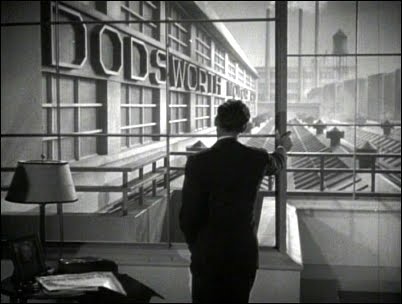
Time for the Monkeys to Move into Hyperspace
“Radical problems call for radical solutions. Conventional politicians are too softheaded to create radical solutions and too fainthearted to implement them if they could, whereas political revolutionaries, no matter how well meaning, ultimately offer only bloodshed followed by another round of repression.
To truly alter conditions, we must alter ourselves — philosophically, psychologically, and perhaps biologically. The first step in these alterations will consist mainly of cutting away the veils in order that we might see ourselves for that transgalactic Other that we really are and always have been.
The flying saucer is warming up its linguistic engines. The mushroom is shoving its broadcasting transmitter through the forest door. Time for the monkeys to move into hyperspace! It’s going to be a weird, wild trip, but guided by the archaic, Gaia-driven gyroscope, we can commence the journey in a state of excitement and hope.”
— Tom Robbins, introduction to The Archaic Revival by Terence McKenna
Dream Eddie
Yesterday, two friends told me about dreams they’d just had about me, dreams that disturbed them a little bit.
The first was set in an office. I was brusque with my friend in the waiting room, it seems, and then I went into my office and was shouting abuse at him through the door. Then I came out and threw a boxcutter at him, like it was a ninja throwing star. It hit him in the chest and lodged there. Yikes. Guess this is what happens when you don’t have an appointment, Dude.
In the second dream, I was in a hotel with my other friend. I was boiling with agitation and drove him away, fast and furious, to show him a house I said I’d been building my whole life. This was a big one-story magnificent glass house, very zen-like and empty of furniture. Once I was there, I was very happy and confident and I adamantly refused to go back to the hotel. My friend wanted to go back and I told him I wouldn’t take him there, and to go get a cab. I laughed at his description of me: “relaxed and peaceful but with a dose of Clint Eastwood.”
So what can we learn here, aside from the obvious fact that two of my closest friends see me as a bit of a dick?
Or is that the lesson?
My wife, who’s a therapist, has told me that in dreams, all the characters are us. Or some aspect of us. Maybe that lets me off the hook, yet I can’t escape feeling a little guilty. It’s strange when somebody tells you, with great intensity, how you acted in their dream. They recount it as if you’d really done it, and it’s like being told you did or said something when you were drunk.
Is there a Dream Eddie? Does he go out when I’m asleep and commit these and perhaps other, possibly much worse, acts?
Or is there some sort of Energetic Eddie? Just as there might be choppy waves in the water after I’ve jumped into the pool, do the things I say and do have an afterlife that impacts others?
Now we’re getting warmer.
Because I have been noticing this lately: how strong our impact can be. How much we can affect other people, and not just by our words and actions, but by our thoughts. You can sit there in judgment and anger at another person, not even expressing it, and they can feel it. The same goes for loving and supportive thoughts. “Thoughts become things,” they say in The Secret, and that’s true, but it’s also true that thoughts ARE things. A thought has power, and a thought with emotion attached to it even more so.
For a long time, I did not believe this, or more accurately, I knew it somewhere but lied to myself about it, because I didn’t want to own it. I told myself that if I thought something but didn’t express it, it didn’t count.
Not true. We’re all fields of energy, and the vibrations that come off us are radiating out into the world and affecting things all the time. I can see it in my dog, for example, who responds like a tuning fork to whatever mood I’m in. I can see it in my co-workers, the movement toward or away from me depending on my own responses.
The reason I didn’t want to own this is that it’s a huge responsibility. Bad enough to have to own your words and deeds, but to have to own your vibrations? Scary.
But better to be aware of your impact, to take responsibility for it and direct it consciously, than to ignore it and give your friends nightmares.
Everybody Knows
But all of a sudden I realized that he knew also, just like I knew. And that everybody in the bookstore knew, and that they were all hiding it! They all had the consciousness, it was like a great unconscious that was running between all of us that everybody was completely conscious, but that the fixed expressions that people have, the habitual expressions, the manners, the mode of talk, are all masks hiding this consciousness.
Passing money over the counter, wrapping books in bags and guarding the door, you know… all the millions of thoughts the people had… the complete death awareness that everybody has continuously with them all the time… all of a sudden revealed to me at once in the faces of the people, and they all looked like horrible grotesque masks… hiding the knowledge from each other. Having a habitual conduct and forms to prescribe, forms to fulfill. Roles to play.
But the main insight I had at that time was that everybody knew. Everybody knew completely everything. Knew completely everything in the terms that I was talking about.
—Allen Ginsberg, Paris Review interview, 1966
So there’s a story in today’s New York Times about a man who died recently in Poughkeepsie. He was found dead in his house at the age of 82. He had reported his wife missing 27 years earlier, and when they went through the house after his death… yeah, they found the wife’s body behind a wall in the basement.
Here’s the story: http://www.nytimes.com/2013/07/16/nyregion/amid-junk-at-hoarders-house-his-missing-wife.html?hp&pagewanted=all
What was really interesting to me was that nobody believed the man’s story that his wife had just up and left him. Everyone, even people who knew nothing about him, found him creepy. They all knew. Not the exact details, maybe. But they knew something was wrong. If they’d allowed themselves to sit more deeply with the knowledge, I think they’d even have intuited that the guy was a murderer.
Why do I think that?
About 30 years ago, I read a very long interview with Allen Ginsberg in the Paris Review, and he talked about this same phenomenon. The heart of his quote is excerpted above.
Everybody knew. Everybody knew completely everything.
Reading this had a profound impact on me. Because I knew that yes, I knew too. And that Ginsberg was right: everybody else knew.
No need to lie. No point in lying. No point in trying to be something you’re not, or pretend something is true when it isn’t. Because we all know the truth. No point, even, in pretending you don’t know.
Reading and absorbing this really changed me. I dropped a lot of pretense and falseness. I began to trust myself and my own perceptions much more. I started speaking the truth as I saw it, without fear. I began to disregard and ignore other people’s attempts at falseness, the “masks” that Ginsberg talked about, and speak to them more directly.
It was liberating. Because of course, other people (most of them) responded in kind. It’s like The Emperor’s New Clothes… a fable illustrating how people pretend not to see what’s right in front of them due to fear or shame or social pressure, and then when someone speaks the obvious truth, the whole sham crumbles in an instant.
Because really, we all see so clearly. We know the truth. We may try to dodge and hide, but we know. We may not know what to do about it, how to feel about it, what will happen next after we admit it. But those things will all take care of themselves. In the meantime there’s nothing whatsoever to be gained by pretending to believe things we don’t believe.
So drop your mask. Believe your own intuition. Trust your own mind. Know what you know. And don’t worry about it. Because everybody knows.
Here’s the full text of Ginsberg’s interview, which is well worth your time: http://www.theparisreview.org/interviews/4389/the-art-of-poetry-no-8-allen-ginsberg
Stand Your Ground
Anything you do is, by its very nature, justified. Stand your ground.
Other people are very scary. Especially if they look, talk, or act differently than you and your people. Stand your ground.
Don’t explore complexity. Don’t let it confuse you. That confused feeling is very uncomfortable. Stand your ground.
Make judgements right away, before you have all the information. It’s so much easier that way. Stand your ground.
Assume authority, even if nobody put you in charge and you did nothing to earn the right to be boss. Stand your ground.
Anything other than being a bully means you’re a weakling, a pushover, a pussy. Stand your ground.
The world is a terrifying place, and you know deep down you have no personal power. Anger is a good substitute. Stand your ground.
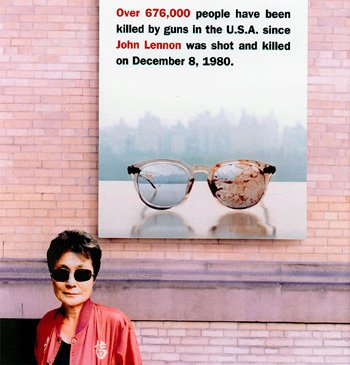
A gun is something you need, and something you have an inalienable right to — not just another product a powerful manufacturers’ lobby wants to sell you. Without it you’re defenseless. Stand your ground.
Refuse to believe that your thoughts and actions create your reality right in front of you. Other people need to take responsibility, not you. You’re not the one causing all the problems… it’s all those other people. You’re just reacting to them. Stand your ground.
Be right at all costs. Because it feels so good to be right. Even if somebody else has to die. Stand your ground.
Mt. Vernon Inn to Close
Very sad news in this morning’s Sentinel:
http://www.orlandosentinel.com/business/os-cfb-real-estate-0708-20130707,0,1142747.story
Maybe this was inevitable after Mark Wayne’s death last year. Mark and his wife Lorna Lambey were the mainstays of The Red Fox bar, performing lounge standards with huge gusto and enthusiasm. I spent many, many happy evenings there, singing along like some kind of idiot. Once I also saw Mark & Lorna (they seem to need that ampersand) in a special benefit performance at The Social, but it wasn’t the same. They only had the magic inside the Red Fox — a tiny little room with maybe 12 tables and a dingy and uniquely depressing bar. Like many I suppose, I originally went to mock, and stayed to cheer. It wasn’t a question of talent or taste… Mark and Lorna believed in what they were doing, and they loved doing it. You couldn’t help loving them back. RIP Mark… kisses Lorna wherever you are… and farewell to a little piece of Orlando heaven.
PechaKucha Orlando v11
Here is a link to the next PechaKucha Night in Orlando:
http://www.pechakucha.org/cities/orlando/events/51d33ebadbdd203428000006
This event may sell out, so we strongly recommend purchasing your tickets online in advance of the event, here:
http://pknorlando-v11.ticketleap.com/pechakucha-night-orlando-v11/
Breathing Room
This morning I spent some time looking at photos of vintage Los Angeles.
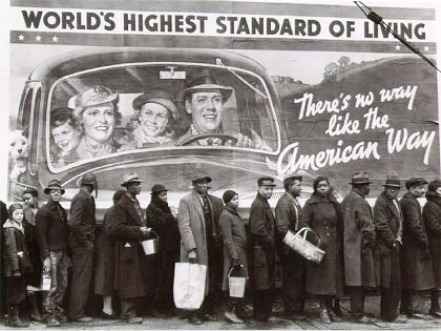
Pretty intensely nostalgic, especially the 60s and 70s with their relatively empty streets and the space between the buildings. One of the reasons we left L.A. 20 years ago was because, starting sometime in the late 80s, the population doubled. The city I remember is long gone; it’s been overrun and obliterated by massive hordes of strangers. The L.A. in the pictures seemed to have some breathing room in it.
The good old days, right?
That’s one cliche; the other is: “it was a more innocent time.” Well though I was only a child, I remember the tail end of the 60s pretty clearly: the assassinations and scary violence, the crackling anger in the air. The intense green of the war in Vietnam on TV every night, juxtaposed with the dirty hippies protesting it and the old people snarling at them in turn. The shuddering way American life rent apart in a way that turned out to be permanent. Innocent is the last word to describe it.
And yet looking at those photos I see an innocence we didn’t know we had. It’s there in the pre-digital look of everything. The facial expression on a teenage boy looking at a hot rod speaks volumes about how much time and bare attention people seemed to have then, versus how frantic, self-absorbed, corporatized and impersonal life is now.
That’s the problem with nostalgia, though. The person who experienced it all, the person I was then, is also long gone. When I was ten years old, Van Nuys Boulevard was magical… it had a kiddie park next door to Ho Toys Chinese Restaurant. I mean: Chinese food! You went upstairs to eat, of all things. Paper lanterns, hot brown mustard, fortune cookies. Until around the time you turn 30, each new experience is an adventure, and you attach that sense of adventure to the people and places around you. Then you look back and it’s like a highlight reel: only the excitement remains.
I remember when I was 21 and traveling on my own for the first time, walking the streets of Berkeley sniffing the air for possibilities like a dog, dreaming of the girl I’d come hoping to see and feeling a glorious sense of freedom while I ate the only thing I could afford, a blueberry bagel. Forget the girl — that bagel is what I remember. It tasted like no bagel has ever tasted since.
I mentioned breathing room, but of course if I push my memory a bit harder, I remember what it was like breathing the Los Angeles air in the 70s… on some days, the smog was so bad that it rolled in like a bank of fog. There were days when you literally couldn’t see from one end of the high school quad to the other due to the thick brown haze. Before President Nixon, of all people, strengthened the Clean Air Act, the smog around L.A. could make your eyes burn and tear up, and you could feel it stirring in the bottom of your lungs when you took a deep breath. That’s the other problem with nostalgia: it only works when you carefully edit the facts or cook the books. Hell, you could even get nostalgic for Nixon.
And again that young man eating the bagel… would I go back and walk in his shoes again? He knew so little, about the world and about himself. Self-medicating, powerless, clueless… he was a mess. If you could have shown him the man I am now, the man he’d someday become, he’d have shit in his overalls. His little eyes would have bugged out of his head, and he’d have wanted to fast forward to get here.
No, it’s not my younger self I want to go back to, not California, not the 60s. It’s that feeling of having all the time in the world stretching ahead of me. It’s the sense of endless possibility.
Breathing room.
The 100%
I’m going to start with an example from politics, but don’t worry: this post isn’t really about politics. It’s about magic.
Back in 2004, a lot of us Democrats convinced ourselves John Kerry had a shot at winning the presidential election. We were convinced, I guess, because we were so opposed to the policies Bush was pursuing (I’ll spare you a list). Election day came as a bitter surprise and made us feel pretty alienated and depressed.
Rebecca and I went to church the next Sunday, and the minister John said something that really stuck with me. He said exit polling showed that of people who voted Republican, 60% described themselves as strongly pro-Bush and 30% as anti-Kerry. Of those who voted Democratic, 70% called themselves strongly anti-Bush and only 40% as strongly pro-Kerry.
And John made the point that metaphysically speaking, if you’re really passionate about “George Bush,” that’s what you’re going to get. God (for lack of a better word — call it the Universe, energy, The Force, whatever) doesn’t know or care whether you’re Pro or Anti. What you think about, what you give passion and energy to, becomes what you experience.
So when I listened to the Right going on about Obama this and Obama that, and when they nominated a candidate they didn’t really like solely in the hope he could beat Obama, it wasn’t difficult to predict the outcome: Obama. I was the only person I know predicting a landslide for the President, and it’s not because I’m so smart… it’s because I know about the Law of Attraction.
John’s sermon was a few years before the release of The Secret, the DVD that went viral and taught many of us about this. A lot of people have a violent negative reaction to The Secret — a good friend of mine said “it reeks of snake oil” and after Oprah promoted it, there were tons of snarky, dismissive media stories. I suppose that’s partly a reaction to the over-the-top theatrics of the presentation: the scrolls and cheesy re-enactments and highly suspect quotes. Also it’s because The Secret makes the Law of Attraction sound like magical thinking… think about a bicycle and presto! a bicycle will appear!
That’s true, actually, except for the “presto” part. The fact is, you can “use” the Law of Attraction only in the same way you can “use” the Law of Gravity. Things in this world work a certain way, and you can go with that and make things easier for yourself, or go against it and have a much more difficult experience. And the way it works is this: strongly held emotion and thinking become consistent action, and consistent action creates results. Sometimes it is like, Presto!, and other times it takes a bit longer.
But what’s tricky is that we’re not always fully aware of what we’re consistently thinking and doing — other people see it more clearly than we do. Often they tell us pretty clearly what we’re doing, and we shrug it off. It takes wisdom, maturity, and sheer courage to just face up to the hard truth that we have created our own results. Your spouse walks out on you and your first reaction is to blame them for everything that went wrong. Harder to look at yourself and notice that you were selfish, uncommunicative, unhelpful with the chores, or just impossible to live with. Especially in a relationship, you get that highly accurate mirror — the other person is reacting up close to what you actually do every day, as opposed to your good intentions. It’s one of the most difficult things in life to look at your circumstances and really own them. I was about 27 the first time I really did that, and I still recall vividly what a bitter pill it was.
However, if you look at the habits of any really successful person, they all do one thing: they take 100% responsibility for everything that happens in their lives. They spend next to no time on self pity, victim stories, or excuses. Whatever happens, they own it. And that allows them to learn from it, and make course corrections. Success and great results aren’t random, or magic. They’re a direct result of this kind of thinking.
One big difficulty people have with this concept is that once they start to get it, they flip it around and use the word blame. “So you’re saying I’m to blame for my cancer, my getting fired, a tree falling on my house, or (fill in the blank).” They frame it up like this: “If something I don’t like comes into my experience, then I must have caused it by my bad thinking.” And then they either totally reject this idea, or accept it and feel hopeless and guilty.
But blaming yourself for the “bad” stuff in your life is a dead end. Blame is finger pointing. It’s a super subtle way of avoiding taking action, and it gets you nowhere. What we have to do is take responsibility, meaning “response + ability.” Something has happened that I don’t like. What am I going to do about it? There’s only this moment, right now; that’s all that exists. All of our power resides in the present moment — that’s where we get to look at what IS (not what was, or will be) and take action.
Thoughts become things. It’s as simple as that. The more consistent the thought, the more passion and energy we bring to it, the faster it manifests as our experience. Once you really begin to use this knowledge in a consistent way, it can change your life. Like magic.
Too Much, Too Soon
A Great Profile
Too Much Too Soon is one of the earliest examples of Hollywood eating its own. Lurid and sleazy, it’s like those cheap 50’s paperbacks that trashed famous people’s lives in the most obvious ways. Yet it remains fascinating, in a heartbreaking and horrifying way, because of its star: Errol Flynn.
Flynn had just come back from years in the wilderness — making one lousy European movie after another while drinking and drug addiction ate away at his self-confidence, his focus, and his looks. At the 11th hour, Darryl Zanuck rescued him by handing him the part of Mike Campbell, the dissipated wastrel in The Sun Also Rises. That excellent performance reawakened Hollywood’s interest in Flynn, and he was offered the part of his old drinking buddy John Barrymore in this bio of Barrymore’s daughter Diana (based on her own cheap paperback, also called Too Much Too Soon).
A soberer man might have rejected this exploitative little production, but at this stage of Flynn’s career, it was like being offered “Hamlet.” He even swallowed his actor’s vanity, allowing himself at age 49 to be cast as a man ten years older, and looking it (at one point in the film, he states his age, but only after a beautiful, telling little pause).
In fact, he wasn’t well cast. Barrymore was a hard, sharp, tough actor — a little guy who went for “big” stylized flourishes in his performances. As copious amounts of liquor gradually coarsened his skills, he descended into grotesque self-parody: waggling his eyebrows and bulging his eyes lasciviously at nothing, rolling his Rs and exaggerating his own cultured diction. Flynn evokes him, but not by behaving anything like him. Despite his swashbuckling reputation, Flynn was a sensitive, gentle performer with a gift of wry humor and rakish charm. His own alcoholism seemed to soften and diffuse his acting while at the same time giving him some inner freedom to finally externalize his rage, shame, bitterness and impotent longing. All of which he puts to effective use in this film, essentially creating a self-portrait with slight Barrymore echoes (the tilt of a hat brim, for example, or standing with body facing the camera but head held in profile).
Unfortunately, he does most of this without much help from the script. It’s a sort of dull soap-opera version of Sunset Boulevard, with the has-been Barrymore rattling around his mansion and his yacht longing for love, or something. In fact the best line in the movie was spoken by Flynn on the set, responding to instruction from the fourth rate, no-name director… drawing himself up, Flynn replied “Are you, Art Napoleon, telling me how to play a drunk?” There’s an unfair perception that Flynn played his final three roles, all of them alcoholics, the exact same way… that he was in fact not acting, but only playing himself. Not true. In The Sun Also Rises, his Mike Campbell is a superficially charming drifter continually being stung to anger by the evidence of his own impotence and irrelevance (and in acting terms, he holds several scenes together single-handedly). In The Roots of Heaven, he’s a cowardly military man tortured by guilt about his own weakness. In this movie, he plays Barrymore as he no doubt had observed him himself: as a broken man occasionally able to pull himself together and show his former stature, but crumbling slowly from the inside and painfully aware of it. Flynn’s uncompromising portrait of greatness in ruins is finally quite haunting, as he intended.
Halfway through the movie, Barrymore dies, and we’re supposed to remain interested in Dorothy Malone’s cartoonish, by-the-numbers Diana. But the movie dies along with Flynn, and there’s nothing left to watch but Ray Danton’s comically phallic tennis bum. Each successive scene is less interesting than the previous one, and Diana’s last-minute pullout from the tailspin of her life is the least convincing of all. In fact, Diana died a couple of years later, from an overdose of booze and pills, at 38.
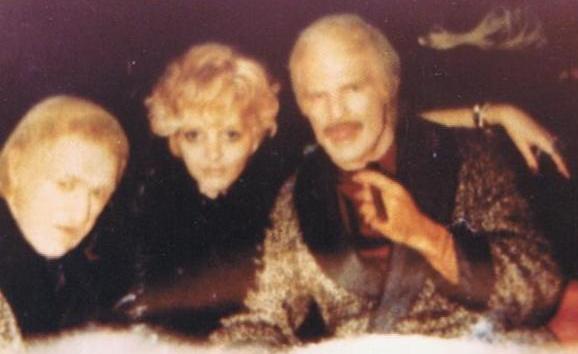
As for Flynn, in real life he exercised his usual gift for snatching disaster from the jaws of success, using the filming as an opportunity to begin an affair with a girl on a neighboring set. She was Beverly Aadland, a 15 year old extra. Flynn had been tried for statutory rape in the 40s, an event which precipitated his downward spiral, but by this time he was living down to his reputation. After his death a year later, the girl’s mother Florence Aadland wrote (or rather, dictated) yet another sleazy paperback: The Big Love, the story of Errol and Beverly’s “romance,” and one of the craziest and most disturbing of all Hollywood memoirs.
In The Big Love, Flo describes the three of them attending a screening of Too Much Too Soon. Flynn was embarrassed to have revealed so much of himself, but also quietly proud of his work. As he should have been. Despite the fact that it’s a bad movie by any formal measure, it gets way under your skin thanks to his courageous and devastatingly sad performance. Despite everything around that performance being hollow — script, direction, acting — it still rings true.


You must be logged in to post a comment.