Terence McKenna Nails It

tv-and-pills-crop

“Not to know one’s true identity is to be a mad, disensouled thing — a golem. And, indeed, this image, sickeningly Orwellian, applies to the mass of human beings now living in the high-tech industrial democracies. Their authenticity lies in their ability to obey and follow mass style changes that are conveyed through the media. Immersed in junk food, trash media, and cryptofacist politics, they are condemned to toxic lives of low awareness. Sedated by the prescripted daily television fix, they are a living dead, lost to all but the act of consuming.”

— Terence McKenna, Food of the Gods

Emmett Fox Sums Up Everything in One Paragraph

“There is no difficulty enough love will not conquer. There is no disease enough love will not heal. No door enough love will not open. No gulf enough love will not bridge. No wall enough love will not throw down. And no sin enough love will not redeem. It makes no difference how deeply seated may be the trouble. How hopeless the outlook. How muddled the tangle. How great the mistake. A sufficient realization of love will dissolve it all. And if you could love enough, you would be the happiest and most powerful person in the world.”


I Happen to Like New York

nyc-dredge-main

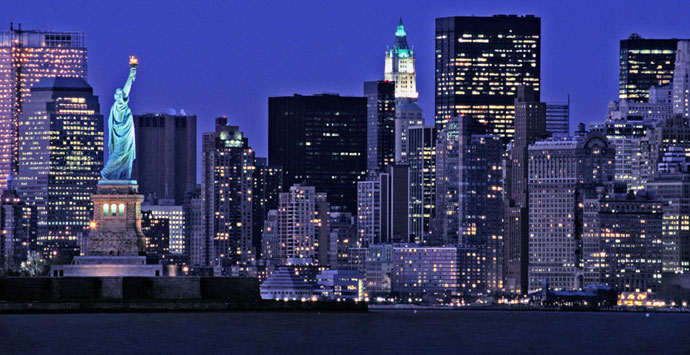
I first saw the skyline of Manhattan from a rental car. My boss and I were driving through New Jersey on a business trip, and we rounded a corner on the turnpike. Suddenly buildings and random objects parted and you could see across the Hudson. From that angle, the skyscrapers seemed to be shooting right up from the water, dozens of them, hundreds, I don’t know. The sight of it was overwhelming. It was like falling in love at first sight, like my heart being pulled out of my chest, like BOOM! I want that. I need that.

What was it I really wanted? I still don’t know. I’m an aggressive, competitive person. Maybe it just looked like the world’s biggest jungle gym. A place to prove myself, prove something to myself. A day or two later I sat in the Rainbow Room at the top of Rockefeller Center, at a window seat, looking at the same view from 50 stories over Midtown, looking south toward the tip of the island. I ordered a martini and as I sipped it, I reflected that I must, after all, be a grownup. Because only a grownup could be having this experience.

I was 35 years old, but in my defense I lived in Los Angeles at the time. Californians are encouraged to stay at the age of 19 mentally, emotionally, and physically — forever. It’s easy to do when there are no seasons, and every day passes by like every other day, just blue skies and dry winds rustling the palm fronds.

This was different. This was real. Manhattan is two things at once… a magical kind of dreamscape in which millions of people live together on a little island, their homes and stores and workplaces rising up to crazy heights, but also a very brutal place. It’s made of steel and glass and concrete, built with untold amounts of sweat and grit and hard work, and it’s loud, unrelenting, pounding, and filthy. Walk down the street on a summer day and enjoy the sun filtering through the trees of Central Park, the profusion of unbelievably beautiful women of all ages, the colorful jumble of street vendors and shop windows… and then you pass a steaming manhole cover and almost pass out at the reeking stench of garbage and human waste that’s been dropped down somewhere under the island for three centuries.

“I happen to like New York,” Cole Porter wrote in one of his magnificent little songs of the 30s.

I happen to like New York, I happen to like this town.
I like the city air, I like to drink of it,
The more I know New York the more I think of it.
I like the sight and the sound and even the stink of it.
I happen to like New York.

You have to like the stink of it as much as everything else. New York is not for the faint of heart, or the sensitive. It’s a tough town. Later, a few years after the business trip, I found myself working there, and I felt for the first time in my life that I had something between my teeth that maybe I could never chew down completely. Something I’d never really master, but also never get enough of, that would never go stale, never disappoint me. It was a feeling of personal power and a kind of triumph. Watch me slowly savor a cigar on the sidewalk, then run to catch the subway and make it to Carnegie Hall just in time for the Kurt Weill concert. Boom! Top of the World, Ma!

And then came 9/11/01.

I saw the skyline from the water again that day. I was on a little boat with 30 other people, a few hours after watching the first tower fall from my office window eight short blocks away. Once the black fog shrouding downtown lifted enough to permit us to leave our building, we ran a few blocks to the water’s edge. I was looking for the first thing that floated and whatever it was, I was going to jump on it. That turned out to be this little pleasure craft. When it was full, we pulled away and headed up and across the river to Jersey. As we rounded the corner of the island, the buildings rose up, glittering in the sun as always, but you didn’t see them, really. Your eyes were only for the enormous plume of grey smoke and ash spewing from a hole where the World Trade Center had been earlier that same morning. At the bottom, this plume looked like the dark, churning, hellish monstrosity it was, but toward the top, almost as high as the towers had been, it had the audacity to begin softening, lightening, and wafting slowly sideways as it hit a current of air.

This hole with the smoke billowing from it was like seeing a profusely bleeding gunshot wound on the body of someone you love. No sound. No other distraction. Just the awareness of a spreading stain that’s slowly and remorselessly blotting out everything you care about most, pulling you toward a new and much worse place and you can’t make it stop.

Yeah, she survived. New York’s knees buckled, as someone wrote at the time, and then she slowly stood up again. But I will never be quite the same. That wound is my wound as well, and I’ll carry it forever.

But here’s the thing. I would not trade it for anything. We were together. Hurt together. It bound us. After that day, New York wasn’t a jungle gym to me anymore. Not a place to prove myself. Maybe that’s when you become a grownup for real, when those you love are no longer a reflection of your own ego. When the people and places around you stop being something you take your own reflected identity from, and instead just become parts of you that you love deeply, in all their complexity and with all their flaws. Not objects anymore.

Last summer I was in Central Park again, walking around the Reservoir. Joggers went past, and parents with strollers, old couples clutching each other, teenagers on skateboards. Wide-eyed tourists pointed their cameras up at the buildings that ring the Park. Ice cream carts jingled their bells. I had a date that night with a couple I totally dig, and we were going to go see a Broadway musical I’d wanted to see since I was a kid, but there was only one place you could see it. But all that doing and planning faded into silence as I felt something so tremendous rising up from the earth beneath me. Not that blasted rifleshot silence of shock and trauma on 9/11, but instead a silence of utter peace, of profound stillness in the heart of all the noise and tumult. The silence of an embrace. I knew I was alright, that I would always be alright, no matter what happened. I knew that New York, with all her huge beating heart, loved me right back.

And when I have to give the world a last farewell,
And the undertaker starts to ring my funeral bell,
I don’t want to go to heaven, don’t want to go to hell.
I happen to like New York. I happen to love New York. 

Time for the Monkeys to Move into Hyperspace

Space Chimps


“Radical problems call for radical solutions. Conventional politicians are too softheaded to create radical solutions and too fainthearted to implement them if they could, whereas political revolutionaries, no matter how well meaning, ultimately offer only bloodshed followed by another round of repression.

To truly alter conditions, we must alter ourselves — philosophically, psychologically, and perhaps biologically. The first step in these alterations will consist mainly of cutting away the veils in order that we might see ourselves for that transgalactic Other that we really are and always have been.

The flying saucer is warming up its linguistic engines. The mushroom is shoving its broadcasting transmitter through the forest door. Time for the monkeys to move into hyperspace! It’s going to be a weird, wild trip, but guided by the archaic, Gaia-driven gyroscope, we can commence the journey in a state of excitement and hope.”

— Tom Robbins, introduction to The Archaic Revival by Terence McKenna

Dream Eddie

dreaming

Yesterday, two friends told me about dreams they’d just had about me, dreams that disturbed them a little bit.

The first was set in an office. I was brusque with my friend in the waiting room, it seems, and then I went into my office and was shouting abuse at him through the door. Then I came out and threw a boxcutter at him, like it was a ninja throwing star. It hit him in the chest and lodged there. Yikes. Guess this is what happens when you don’t have an appointment, Dude.

In the second dream, I was in a hotel with my other friend. I was boiling with agitation and drove him away, fast and furious, to show him a house I said I’d been building my whole life. This was a big one-story magnificent glass house, very zen-like and empty of furniture. Once I was there, I was very happy and confident and I adamantly refused to go back to the hotel. My friend wanted to go back and I told him I wouldn’t take him there, and to go get a cab. I laughed at his description of me: “relaxed and peaceful but with a dose of Clint Eastwood.”

So what can we learn here, aside from the obvious fact that two of my closest friends see me as a bit of a dick?

Or is that the lesson?

My wife, who’s a therapist, has told me that in dreams, all the characters are us. Or some aspect of us. Maybe that lets me off the hook, yet I can’t escape feeling a little guilty. It’s strange when somebody tells you, with great intensity, how you acted in their dream. They recount it as if you’d really done it, and it’s like being told you did or said something when you were drunk.

Is there a Dream Eddie? Does he go out when I’m asleep and commit these and perhaps other, possibly much worse, acts?

Or is there some sort of Energetic Eddie? Just as there might be choppy waves in the water after I’ve jumped into the pool, do the things I say and do have an afterlife that impacts others?

Now we’re getting warmer.

Because I have been noticing this lately: how strong our impact can be. How much we can affect other people, and not just by our words and actions, but by our thoughts. You can sit there in judgment and anger at another person, not even expressing it, and they can feel it. The same goes for loving and supportive thoughts. “Thoughts become things,” they say in The Secret, and that’s true, but it’s also true that thoughts ARE things. A thought has power, and a thought with emotion attached to it even more so.

For a long time, I did not believe this, or more accurately, I knew it somewhere but lied to myself about it, because I didn’t want to own it. I told myself that if I thought something but didn’t express it, it didn’t count.

Not true. We’re all fields of energy, and the vibrations that come off us are radiating out into the world and affecting things all the time. I can see it in my dog, for example, who responds like a tuning fork to whatever mood I’m in. I can see it in my co-workers, the movement toward or away from me depending on my own responses.

The reason I didn’t want to own this is that it’s a huge responsibility. Bad enough to have to own your words and deeds, but to have to own your vibrations? Scary.

But better to be aware of your impact, to take responsibility for it and direct it consciously, than to ignore it and give your friends nightmares.

Everybody Knows

???????????????????????????????????????????????????????

But all of a sudden I realized that he knew also, just like I knew. And that everybody in the bookstore knew, and that they were all hiding it! They all had the consciousness, it was like a great unconscious that was running between all of us that everybody was completely conscious, but that the fixed expressions that people have, the habitual expressions, the manners, the mode of talk, are all masks hiding this consciousness.

Passing money over the counter, wrapping books in bags and guarding the door, you know… all the millions of thoughts the people had… the complete death awareness that everybody has continuously with them all the time… all of a sudden revealed to me at once in the faces of the people, and they all looked like horrible grotesque masks… hiding the knowledge from each other. Having a habitual conduct and forms to prescribe, forms to fulfill. Roles to play.

But the main insight I had at that time was that everybody knew. Everybody knew completely everything. Knew completely everything in the terms that I was talking about.

—Allen Ginsberg, Paris Review interview, 1966


So there’s a story in today’s New York Times about a man who died recently in Poughkeepsie. He was found dead in his house at the age of 82. He had reported his wife missing 27 years earlier, and when they went through the house after his death… yeah, they found the wife’s body behind a wall in the basement.

Here’s the story:  http://www.nytimes.com/2013/07/16/nyregion/amid-junk-at-hoarders-house-his-missing-wife.html?hp&pagewanted=all

What was really interesting to me was that nobody believed the man’s story that his wife had just up and left him. Everyone, even people who knew nothing about him, found him creepy. They all knew. Not the exact details, maybe. But they knew something was wrong. If they’d allowed themselves to sit more deeply with the knowledge, I think they’d even have intuited that the guy was a murderer.

Why do I think that?

About 30 years ago, I read a very long interview with Allen Ginsberg in the Paris Review, and he talked about this same phenomenon. The heart of his quote is excerpted above.

Everybody knew. Everybody knew completely everything.

Reading this had a profound impact on me. Because I knew that yes, I knew too. And that Ginsberg was right: everybody else knew.

No need to lie. No point in lying. No point in trying to be something you’re not, or pretend something is true when it isn’t. Because we all know the truth. No point, even, in pretending you don’t know.

Reading and absorbing this really changed me. I dropped a lot of pretense and falseness. I began to trust myself and my own perceptions much more. I started speaking the truth as I saw it, without fear. I began to disregard and ignore other people’s attempts at falseness, the “masks” that Ginsberg talked about, and speak to them more directly.

It was liberating. Because of course, other people (most of them) responded in kind. It’s like The Emperor’s New Clothes… a fable illustrating how people pretend not to see what’s right in front of them due to fear or shame or social pressure, and then when someone speaks the obvious truth, the whole sham crumbles in an instant.

Because really, we all see so clearly. We know the truth. We may try to dodge and hide, but we know. We may not know what to do about it, how to feel about it, what will happen next after we admit it. But those things will all take care of themselves. In the meantime there’s nothing whatsoever to be gained by pretending to believe things we don’t believe.

So drop your mask. Believe your own intuition. Trust your own mind. Know what you know. And don’t worry about it. Because everybody knows.

Here’s the full text of Ginsberg’s interview, which is well worth your time: http://www.theparisreview.org/interviews/4389/the-art-of-poetry-no-8-allen-ginsberg

Mt. Vernon Inn to Close

RedFoxLounge403333

Very sad news in this morning’s Sentinel:

http://www.orlandosentinel.com/business/os-cfb-real-estate-0708-20130707,0,1142747.story

Maybe this was inevitable after Mark Wayne’s death last year. Mark and his wife Lorna Lambey were the mainstays of The Red Fox bar, performing lounge standards with huge gusto and enthusiasm. I spent many, many happy evenings there, singing along like some kind of idiot. Once I also saw Mark & Lorna (they seem to need that ampersand) in a special benefit performance at The Social, but it wasn’t the same. They only had the magic inside the Red Fox — a tiny little room with maybe 12 tables and a dingy and uniquely depressing bar. Like many I suppose, I originally went to mock, and stayed to cheer. It wasn’t a question of talent or taste… Mark and Lorna believed in what they were doing, and they loved doing it. You couldn’t help loving them back. RIP Mark… kisses Lorna wherever you are… and farewell to a little piece of Orlando heaven.

Breathing Room

la

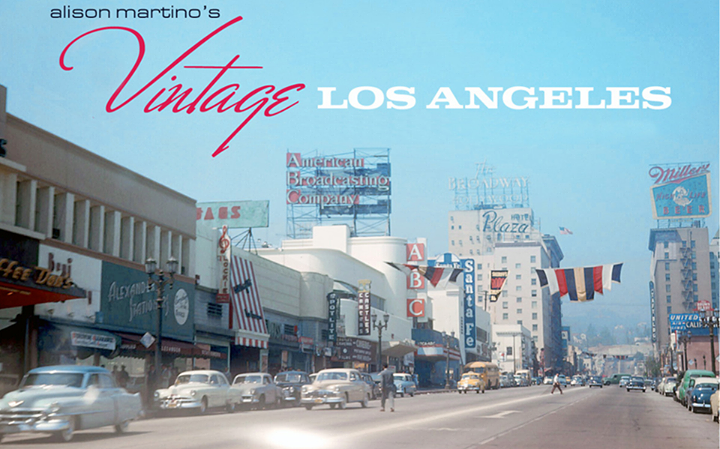
This morning I spent some time looking at photos of vintage Los Angeles.

Pretty intensely nostalgic, especially the 60s and 70s with their relatively empty streets and the space between the buildings. One of the reasons we left L.A. 20 years ago was because, starting sometime in the late 80s, the population doubled. The city I remember is long gone; it’s been overrun and obliterated by massive hordes of strangers. The L.A. in the pictures seemed to have some breathing room in it.

The good old days, right?

That’s one cliche; the other is: “it was a more innocent time.” Well though I was only a child, I remember the tail end of the 60s pretty clearly: the assassinations and scary violence, the crackling anger in the air. The intense green of the war in Vietnam on TV every night, juxtaposed with the dirty hippies protesting it and the old people snarling at them in turn. The shuddering way American life rent apart in a way that turned out to be permanent. Innocent is the last word to describe it.

And yet looking at those photos I see an innocence we didn’t know we had. It’s there in the pre-digital look of everything. The facial expression on a teenage boy looking at a hot rod speaks volumes about how much time and bare attention people seemed to have then, versus how frantic, self-absorbed, corporatized and impersonal life is now.

That’s the problem with nostalgia, though. The person who experienced it all, the person I was then, is also long gone. When I was ten years old, Van Nuys Boulevard was magical… it had a kiddie park next door to Ho Toys Chinese Restaurant. I mean: Chinese food! You went upstairs to eat, of all things. Paper lanterns, hot brown mustard, fortune cookies. Until around the time you turn 30, each new experience is an adventure, and you attach that sense of adventure to the people and places around you. Then you look back and it’s like a highlight reel: only the excitement remains.

I remember when I was 21 and traveling on my own for the first time, walking the streets of Berkeley sniffing the air for possibilities like a dog, dreaming of the girl I’d come hoping to see and feeling a glorious sense of freedom while I ate the only thing I could afford, a blueberry bagel. Forget the girl — that bagel is what I remember. It tasted like no bagel has ever tasted since.

I mentioned breathing room, but of course if I push my memory a bit harder, I remember what it was like breathing the Los Angeles air in the 70s… on some days, the smog was so bad that it rolled in like a bank of fog. There were days when you literally couldn’t see from one end of the high school quad to the other due to the thick brown haze. Before President Nixon, of all people, strengthened the Clean Air Act, the smog around L.A. could make your eyes burn and tear up, and you could feel it stirring in the bottom of your lungs when you took a deep breath. That’s the other problem with nostalgia: it only works when you carefully edit the facts or cook the books. Hell, you could even get nostalgic for Nixon.

And again that young man eating the bagel… would I go back and walk in his shoes again? He knew so little, about the world and about himself. Self-medicating, powerless, clueless… he was a mess. If you could have shown him the man I am now, the man he’d someday become, he’d have shit in his overalls. His little eyes would have bugged out of his head, and he’d have wanted to fast forward to get here.

No, it’s not my younger self I want to go back to, not California, not the 60s. It’s that feeling of having all the time in the world stretching ahead of me. It’s the sense of endless possibility.

Breathing room.

At the Rally to Restore Sanity

Went to DC last weekend for the Rally to Restore Sanity. We knew it would be a big crowd, so rather than taking the Metro, Miranda, Ryan and I walked the two and a half miles from her townhouse down Pennsylvania Ave. to the Mall. It was Saturday October 30, a perfect Fall day with a cool morning breeze that sent a few early leaves scattering around us. We had arranged to meet Phil and Nancy at the Sculpture Garden, and then the plan was to find Steve and Mark, who were already close to the stage. But by the time we got to the Rally itself, we found it impossible to meet up with anyone: there was no cell reception. Two hundred thousand other people were on their devices too, and the grid went down.

As we looked around for a spot to watch from, the crowd continued to grow more dense. At first, many people had staked out little bits of territory with comforters and lawn chairs. Gradually these disappeared as we were all pushed inexorably closer and closer together. Picnic blankets were trampled upon. Lawn chairs were pulled tight. People who had been sitting were forced to stand. By the time the Rally started, we were so wedged in that you literally could not clap unless you raised your hands in the air above you. Fortunately it was the most mellow, good humored group you can imagine. Liberals, of course. We don’t even get mad when you trample our blankets.

At one point, an elderly lady collapsed near us and people began shouting “Medic!” Ryan, who is a nurse, took off immediately toward her. The unmovable crowd miraculously parted for him. She was fine, as it turned out. But you could feel everyone’s jittery collective physical discomfort at being so jammed in. I’ve never been anxious in a crowd before. Thanks to yoga and meditation I knew enough to breathe every time I felt resistance arising. But I couldn’t really see anything. Tiny bits of stage and edges of jumbotrons. Signs on sticks above heads. Mylar balloons. Tops of heads. So I mostly listened. As it turned out, that was fine.

The people behind The Daily Show are pretty clever. Just as the show is a parody that skewers the pompous cliches of TV news programs, the Rally was a parody of a rally. There was a rambling, self contradictory benediction (from Father Guido Sarducci, an inspired choice). Lots of failed chants and goofy singalongs. Awards, tributes and guest speakers. Most of the jokes were good, and everything was geared to support the same message: that we all have to drop the conflict and the name calling if we want to solve our problems. Of course, there was a false equivalency drawn between the right and the left… one side is clearly more angry, divisive and hateful than the other, and I bet you know which side I mean. However, the overall point was well taken: meet your opponent’s anger with some humor, and let’s all see if we can bring it down a notch.

The day before, Phil had been kind enough to invite me to join him and Nancy on a tour of the Capitol he’d arranged through some former Poli Sci students of his from his classes at UCLA and Pepperdine. It was sweet and kind of moving to watch these two smart, accomplished, powerful people wandering like wide-eyed kids, absorbing these fascinating little details and the huge historic backdrop to it all. We started out in one of the Senate office buildings, where we got a behind-the-scenes look at the ornate offices and venerable hearing rooms — including the room that held the hearings on the Titanic, Army/McCarthy, organized crime, Watergate, and Iran/Contra… hearings I’d actually watched live (only the last two, thankyouverymuch).

We went to the “crypt” in the bottom of the Capitol, where a marble compass in the floor marks the very center of the city and the point from which the four neighborhoods (NW, NE, SW, SE) all begin. We stood in the Rotunda, this awe-inspiring space with beautiful sunlight pouring down through the Dome’s arching windows… ringed with giant Trumbull paintings and marble statues of the most admirable figures of U.S. history (plus a bronze replica of Reagan somebody snuck in). We also sat in the House and Senate galleries, looking down into those little chambers where some of the noblest words in American history, and some of the stupidest, have been spoken. Just outside the gallery entrances, the tile is visibly worn down and discolored from two centuries of the people walking in to watch their representatives at work.

The highlight of this tour was a half hour we spent in the Budget Committee’s chamber with a gentleman named Chris who manages the office budget process. Chris came to DC as an intern during Watergate, intending to stay a summer or so… he’s been there for 36 years. Soft-spoken, friendly, and articulate. In response to Phil’s question he talked about the decline in civility and comity that he’s witnessed over the past three decades. In the past, congressmen used to debate heatedly and then go hang out after work — they were personal friends and could work together when they needed to. Now more and more, only ideologues get elected. He’s worried about the future and what will happen after he retires in a couple of years.

What he takes comfort from, he said, is the young people. And with good reason: they were awesome. They were everywhere, working as aides and pages and office assistants, all of them professional, bright, and idealistic. Together with the older people we saw, we got a clear picture of the Congress at work — and it’s far from the grotesque caricature offered by the cynical operatives who want to advance corporate power by making people give up on their government. It’s a lot of savvy people working very hard, people who understand the responsibility that comes with power, people who aren’t sitting home in their barcaloungers complaining, but are busy getting things done.

After the Rally and dinner, Phil and Nancy and I walked around the White House — luminous in the floodlights, and home at this particular fortunate moment to a calm, wise and potentially great man. Then we went next door to the Round Robin bar in the Willard hotel. The bar is right off the lobby and is said to be the place where the term “lobbyist” was coined. It’s a tiny little round room ringed with sketches of its more illustrious patrons: Walt Whitman and Mark Twain among them. We had to stand at the bar until John Hodgman and his date vacated their table. So we sat and had martinis like a couple of grownups and toasted to DC and to our little reunion. Until this weekend, I hadn’t seen Phil in 20 years… we’ve had some longstanding, difficult and extremely painful conflicts in our time. But we finally reached across the aisle, so to speak, and recognized the things that connect us are stronger than those that divide us. I hadn’t expected to, but I told him I loved him. He looked surprised; he said the same. Our old issues seemed very far away, like some debate between Hayne and Webster on the Senate floor in 1830… and I bet those dudes went out for drinks afterwards. After I put Phil and Nancy into a taxi I walked out into the clear, crisp Washington evening and thanked the stars over my head for letting me outlive my youth.

There’s going to be the usual ruckus these next few weeks as the gloriously ascendant tea partiers come crowing and clucking into power. The wheel turns, and always some new bunch of people think they’re going to take charge and change everything. But real change takes time, and perseverance, and a willingness to accept and work with other people rather than shutting them out. You have to let go of your grievances, and your need to be right. Compromise has somehow become synonymous with failure, but it’s what our whole beautiful system is built on. And compromise starts with seeing past your own narrow point of view. It’s not the other guy who needs to change, it’s you. If you really want to restore sanity, a rally isn’t going to do it. You have to start with your own.

Buy the Surfboard

About ten minutes ago, I got a professional email, the kind I usually ignore… this one about a financial services conference that had a panel discussion.

One CEO on the panel was talking about using social media as a marketing tool. He compared the rise of social media to a tsunami, and he urged his audience to go ahead and “buy the surfboard.”

That phrase leapt out at me. For one thing, my company has started talking about social media, and I’ve been dragging my feet. Don’t want to think about it, don’t want to get involved. Even though I know it’s the next frontier of my profession, and I need to explore it.

For another thing, I’ve been thinking about learning to surf. No, really. It’s something I wanted to do in my 20s, but for various reasons… didn’t. But it struck me recently that I still could do it. I live in Florida, don’t I? What’s stopping me?

Buy the surfboard.

That is some bloody great advice.

For all of us, there’s some issue where we’re standing at the edge of the pool, tentatively dipping our toe in. Hanging back, hesitating. Making some kind of excuse for inaction: I’m too old, I’ll look foolish, I could never do that, whatever. That’s your ego, trying to be helpful as usual. Protecting you, and in the process half strangling you and blocking your joy.

Meanwhile, there’s your intuition, telling you to get out there and take a few risks. Try something different. Do the thing you’re afraid to do, but can’t stop thinking about either….

Give that attractive stranger a friendly greeting. Sign up for those piano lessons. Call your estranged uncle and apologize. Send your poem to that magazine. Take your friend up on the offer to go rock climbing. End that draining relationship. Go skydiving.

Waiting for a better moment? It won’t come.

Buy the surfboard.