Watching You

“What is this salty discharge?” — Jerry Seinfeld, crying for the first time, on Seinfeld.

Something strange has been happening to me lately. I’m developing empathy.

Once in my 30s I had a calendar for Geminis that described us as “good listeners… as long as you’re interesting” and I had to laugh, because that pretty much nailed me. For most of my life other people fell into two categories: interesting, and not. Those in the “not” category barely existed for me — they were formless blobs who had to really get in my face to even come into focus.

I wasn’t some kind of psycho; I managed to get married, have friends, raise a kid, and I think I was pretty present in relationships.

But for the most part it was as if a glass wall existed between me and other people. The wall, I suppose, was my judgment and control, which in turn were driven by a deeper sense of powerlessness and fear.

I turned 50 a year and a half ago. It was a trauma. How could I be 50? I mean, I dug the benefits of getting older: more wisdom, more poise, better judgment. But in my mind I was more like a 25 year old who was getting very cool. The idea that I could no longer be considered young by any objective measure was pretty sobering.

On the heels of that came a few serious difficulties and intense life changes that I won’t go into here, coupled with deeper spiritual practice including meditation and yoga.

And lately, more and more, everyone is interesting. I find myself much less focused on advancing my agenda and point of view, and instead just watching. Really paying close attention to people, noticing the tiny flickers of expression that cross their faces, listening to the gaps and pauses between their words, and hearing what they’re really saying.

And it’s breaking my heart a little bit, because what I’m seeing so often is that powerlessness and fear in them. The harsh self judgment, the shame, the anxiety. The little child that’s still there, innocently looking for love and validation (thanks for the video, Mina), and so often not finding it. What William Blake was talking about in “London.”

It’s changing me. Like a couple of weeks ago when our dishwasher broke and I had all kinds of crazy difficulties with HH Gregg. I ended up in the store with my fistful of paperwork, righteously and justifiably pissed off, engaging in a tug of war with a pompous middle manager over their policies and procedures.

At a certain point, I stopped talking, and started watching.

The middle manager just wanted to be right. He had his little square of turf, and on that turf he was the king. He had a few things to say. And I realized that he was going to give me everything I wanted, but only after he made his little stand. So I let him. It didn’t cost me anything (except 20 minutes) and I walked out with a free $175 upgrade, and a somewhat belated apology. And I made a point of thanking him, using his name, and giving him that little bit of respect he was craving.

It works the other way, too. There are people I love, and in the past they just got the stamp of approval and that was that. I took it for granted that they knew they had my affection, and secure in that assumption, I said whatever I wanted and only noticed their pain or their needs if they specifically brought them up. Now I’m really seeing, and it’s astonishing that these beautiful, radiant people are experiencing so much confusion and self doubt.

I hesitate to put all this out here. Maybe you all have this empathy, and I’m just an arrogant asshole who’s getting older and scared about it, and finally becoming “nice.” But even if that’s true, it’s okay. A whole new world is opening up in front of me. Everyone has something to tell me… something important. I’m paying attention now. Better late than never.


Walking Meditation

walking med

This morning, we did something different in meditation class: a walking meditation. About 20 of us went across the street to the park, our teacher Jamie struck a chime on his singing bowl, and we were off.

I shut my eyes and started out. At first, I couldn’t get the self-conscious grin off my face, thinking how silly I must look to the passing cars and pedestrians. But then I stopped thinking and began to focus – partly because I had to.

With my eyes closed, each step was an adventure. Lift the leg… bring it forward… wobble slightly on the other… put the leg down. At one point, the ground wasn’t where I expected it to be and I fell forward slightly. Ah, expectations… valuable lesson there. Stop thinking. Back to mindfulness. One step at a time, with full curiosity about each subsequent step. So different when you remove your ego with its endless expectations.

There were big trees in the park, and I worried I might walk smack into one. But as I focused closely on each step, I could feel the ground changing under me. Some slight softening of the earth, coupled with an incline, signaled that I was nearing a tree. Something would tell me to stop and I’d open my eyes slightly and I’d see a tree either in front of me or next to me.

We did this for 25 minutes, but it seemed like a matter of seconds. I could have done it all day. It was the best meditation I’ve had yet — a powerful demonstration of the benefits of staying firmly in the present moment and paying rapt attention to it. We are, after all, walking through a park with our eyes closed… if only we knew it.

Humble Warrior

humble


You stand with one leg in front, bent; the other stretched behind you. A deep bow at the waist, head down, with hands interlocked and arms stretched high behind and above you. It takes enormous strength and balance, put in the service of humility, devotion, receiving. It’s a yoga pose called humble warrior.

It’s also an attitude.

In Living in the Light, Shakti Gawain explains how we all have male and female energy within us. The “male” energy is our ego: our ability to take action in this world. The “female” energy is our intuition: our inner guidance that feels like it comes from some higher power; it certainly knows way more than our ego does, and often we don’t know how it knows what it knows. But it’s always right.

To understand this, you have to put aside your socialized views of men and women, of GI Joe and Barbie, and however you feel about that. This is about energy, not gender.

The proper synergistic relationship between our inner male and female, Shakti says, is when our inner female says “I want that” and our inner male says “Great! I’ll get it for you.”

In so many people, what you see is the ego running wild and deciding everything, with the intuition a lonely, unheard voice in the background. An inner male dominating and subjugating, or simply ignoring, an inner female. And of course, there are plenty of demonstrations of this in the physical world: men or women who are aggressive, pushy, narcissistic, domineering, etc.

Or the reverse: often you see people with a strong inner sense but limited ability to take action. The sweet, kind people who can never seem to get their career going, to get over their illnesses, to make any money, or get ahead with their lives. The beautiful losers. And while often they’re superficially attractive people, they do a lot of damage through their inability to take a stand, draw clear boundaries, fend for themselves, or manifest their actual agenda in the world. Often these spiritual people turn away from the world entirely, which is emphatically not what the world needs. Often they tell themselves they’re taking the high road by not taking the action they know they should be taking, when really it’s helplessness. Turning away from a fight isn’t a moral decision if you’re actually unable to fight. People like this are manifesting a strong inner female but a weak inner male.

You can see this playing out in relationships: one partner sets the agenda, makes the decisions, “wears the pants” so to speak. The other is the supportive homemaker, the nurturer. At worst, these relationships can become abusive and toxic; think about the Me Too movement. But even when the partners stay relatively balanced and harmonious, sooner or later the moment comes when one gets fed up and says: “why can’t you ever…?” because conflict arises over this fundamental difference. The problem is that in the long run you can’t simply outsource to job of your inner male or your inner female, whichever one you can’t actualize yourself, to a partner.

On a more public scale, you can see this manifesting in the Republican and Democratic parties. Republicans usually think they can “go it alone,” that they’re self-made, that people needing help are whiners, that might makes right. Often, their ignorance is shocking. They know how to use power, but their use of it is mindless at best and monstrous at worst. Ego is the whole show. Democrats are about inclusion, “fairness,” helping the needy, leveling the playing field (which often rightfully enrages Republicans who earned their money and don’t want it taken away and given to people who didn’t). Democrats’ values are great but they usually don’t know how to fight effectively and often their solutions are unrealistic and idealistic to the point of absurdity. And as often happens on the individual level with intuition and ego, they only get a chance to prevail when the other side (the ego) crashes and burns through its corruption and blindness. On the political level, ego and intuition hate each other’s guts, and yet they need each other. It’s the same as with relationships. They’re actually two critical parts of the same system… if only they knew how to work together.

So the answer starts on the personal level. What we want to have is a healthy and confident ego that knows how to make things happen in the world…  but 100% in service to, and in support of, a clear and fully realized intuition. This is the proper role of both energies, developed and encouraged to be equally strong inside of every individual. This should be the goal of real spiritual practice: not turning away from the world, but engaging with it mindfully. Fearless and focused action based on steady wisdom.

In other words, humble warrior.

Going Back

9-11

“There were many words that you could not stand to hear and finally only the names of places had dignity. Certain numbers were the same way and certain dates and these with the names of the places were all you could say and have them mean anything. Abstract words such as glory, honor, courage, or hallow were obscene beside them.” – Ernest Hemingway, A Farewell to Arms

When they reopened my office in lower Manhattan on Tuesday, September 18, 2001, I rode back into the city on my usual morning bus. All through the Lincoln Tunnel, a mile and a half under the Hudson, I gripped the armrests with white knuckles, certain that a bomb was going to go off. Nothing happened, just like nothing had happened during the previous week when I’d awaken in the middle of the night weeping, sweating, terrified. Then I’d check each window and door of our three-story house in the Jersey suburbs, making sure they were bolted. No terrorists out there. Back to bed, but not to sleep.

So after an eternity I made it through the tunnel, out of the bus station, up the escalator to the corner of 40th and 8th. At the entrance to Port Authority, on every wall, pillar, window, column were little 8½ x 11 posters. Each one was homemade, and said much the same thing: have you seen this person? The name, the family’s contact information, and a big picture of someone. Happy pictures of people on vacation, or at a birthday party. In those early confused days, some held onto the belief that missing relatives might be in local hospitals, disoriented or unconscious. Suddenly seeing those hundreds of smiling faces, and their little messages of love and grief, like candles held out to me in outstretched palms, the pain almost felled me to my knees. I felt stunned, like a man who’s been punched in the stomach. I stood there for a long time with them all watching me, not turning away, just feeling it.

The subway ride downtown. The World Trade Center had been a major transportation hub, and with it gone, there were fewer trains. What trains there were in service were all half empty this morning. Now normally on the train, people bury themselves in the paper or their iPods or sit with their eyes shut. You learn to avoid eye contact in a big city; it’s safer. But this morning, and for several days after, everyone looked right at you. Not just at you but into you, the way a lover looks into you sometimes, with a probing, delicate curiosity and defenselessness. A look you might flinch from, especially from a stranger. But our egos had crumbled to rubble and now we knew that looking away wasn’t going to make us any safer. Far, far from it. We had nothing left to hide from each other. Our faces all spoke the same holy, unspeakable thing.

Out of the subway and up the stairs to downtown, where everything was as silent and white as after a snowfall. Every surface still covered with the ashes of the World Trade Center. No color anywhere, it seemed — only the green camouflage of the soldiers who stood on every corner of the twisted little streets of lower Manhattan. The soldiers were all young men, huge GI Joe types with hulking V-shaped torsos and biceps like hams. God knows where they’d been shipped in from; nothing like that grows in New York. Their faces, at least, were not open. Each stood stock-still and expressionless at a wooden barricade with a huge semiautomatic weapon strapped over his shoulders. On guard just like I had been at my house, against a threat that wasn’t coming anymore because the most terrible thing that could happen already had.

The other thing about downtown was the smell. A week earlier, it hadn’t been so bad. Running to the water, I had given the rag that was covering my face to someone else, so I had breathed in the smoke and ash—but I didn’t recall anything like this. A burning smell, but not a sweet burning smell. A big white-noise charnel house smell that entered not just your nostrils but your pores. In it you could detect traces of plastic, rubber, wood, metal, and maybe something else. It’s the worst odor you can imagine, and if there’s a Hell, that’s how it smells. An elegantly dressed woman on the street next to me cried out something wordlessly about it… a sound I’ve never heard before or since. An animal moan of revulsion and sadness and protest.

Later, people put flowers and other memorials on the sidewalks, but for now there were just a few signs in windows: little makeshift printouts of flags, or pictures of the towers with the date. As if to just say “we were here,” the way miners trapped in a shaft might scrawl it on a wall. The merchandising hadn’t begun, nor the bickering over what to build at Ground Zero, nor the lies about how the air was perfectly safe to breathe—only the first of so many lies. In the blasted silence of downtown, with the smoke still belching from its enormous wound, there was only a terrible, stricken kind of humility and awe that had its own special… what?

Beauty, I guess.

The beauty of finally seeing, and knowing, the worst.

Photo of Ground Zero by Eddie Selover, September 2001.

Seven Factors, Five Hindrances

From the Buddhist who led my meditation class this morning:

7 Factors of Enlightenment

* Mindfulness: to be aware and mindful in all activities and movements both physical and mental
* Joy or rapture
* Investigation into the universal laws of nature
* Concentration
* Relaxation or tranquility of both body and mind
* Energy
* Equanimity: to be able to face life in all its vicissitudes with calm of mind and tranquility, without disturbance

5 Hindrances to Enlightenment

In Buddhism, the five hindrances are negative mental states that impede success with meditation and lead away from enlightenment.

* Sensual desire: Craving for pleasure to the senses
* Anger or ill-will: Feelings of malice directed toward others
* Sloth, torpor or boredom: Half-hearted action with little or no concentration
* Restlessness or worry: The inability to calm the mind
* Doubt: Lack of conviction or trust

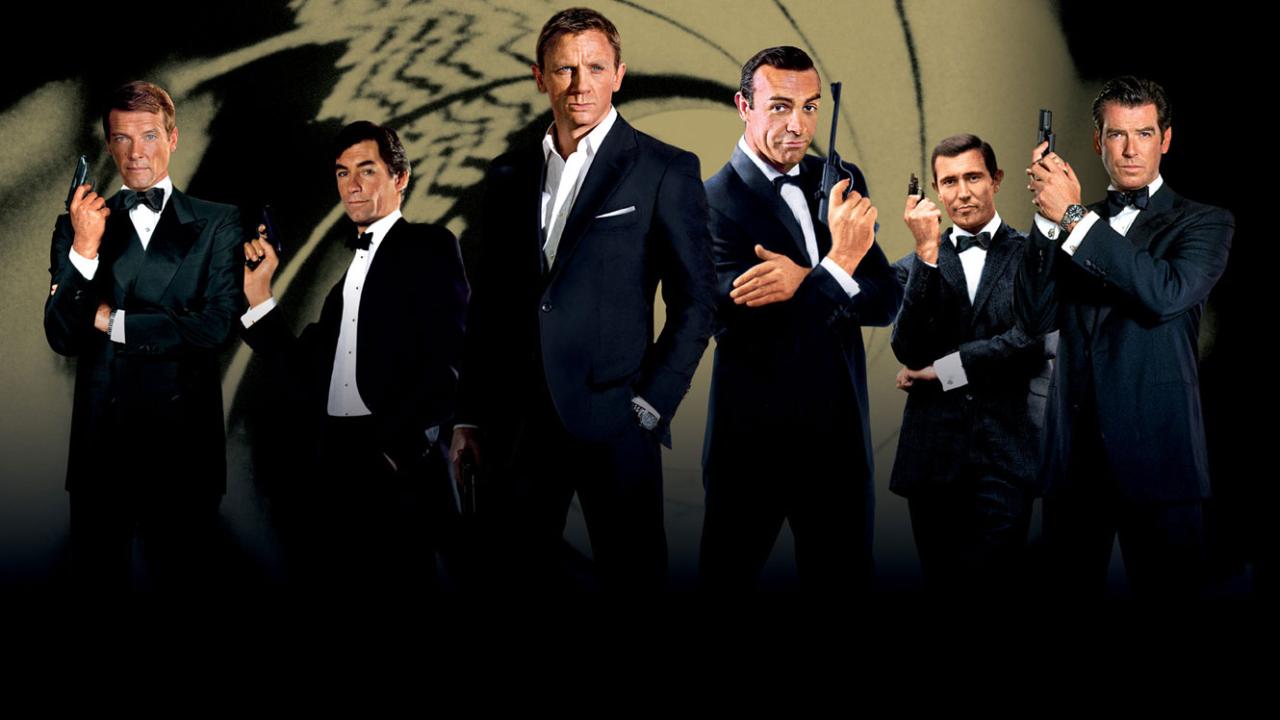
My Life in Bond Movies

Bonds-Clean-DI-to-CW

In honor of Quantum of Solace, here’s a short history of my life, measured out in Bond movies.

Goldfinger. Wow, a toy car that has guns and an ejector seat! I am a little kid and nothing could possibly be cooler. Not even robots.

Thunderball. It’s all about the Aston Martin. Even the producers know it, because it makes an appearance in scene one, bizarrely shooting water out of its exhaust pipes. I am seven now and this is cool, cool, cool. But the movie is long, long, and half underwater. I fall asleep.

You Only Live Twice. Takeme takeme takeme! No? Why the hell not? I fume with impotent rage in the backseat of our Chevy Impala as we drive past the theater. Aw Daddy, doncha love your little Eddie?

Dr. No/From Russia With Love. Reissued with Goldfinger. Mom and Dad dump me at the Saturday matinee… undoubtedly to get rid of me for six hours. Excellent plan. It’s a win-win.

OHMSS. Doesn’t have Connery, so who cares? It’s the end of the 60s. We have all the time in the world.

Diamonds are Forever. Connery is back; this is big. Now I’m 13, and my father takes the whole family. But it’s Easter Sunday and I am sitting next to my grandmother, who is also a minister. Awkward. You know something? Dad can be kind of passive aggressive.

Live and Let Die/The Man with the Golden Gun. Watergate, the weary end of Vietnam, cutesy ragtime music on the radio, and Roger Moore as James Bond. Nobody who lived through the 70s will ever be nostalgic about it.

The Spy Who Loved Me. Wow, a submarine Lotus. I’m a jaded teen now, but this is hot. Ditto Barbara Bach in her black dress. Plus I am old enough to drive myself and my friends to the movies. Things are looking up.

Moonraker. I see this on my first big travels alone, in a grimy grindhouse on a drizzly, icy summer day in San Francisco. The audience is 90% homeless and drunk and happy to be indoors, even watching this gawdawful movie.

For Your Eyes Only. Bonding with Sean MacFalls, who I meet working a loading dock and who is as big a fan as I am. Around this time I see Thunderball on TV while stoned and notice how badly made it is.

Octopussy. Roger Moore is assuming the leathery appearance of an old satchel. Sean MacFalls calls the movie an All Time Low. Little do we know that next up will be…

A View to A Kill. I am married now. Rebecca yells rude things at the screen about Roger Moore’s lack of sex appeal. That’s my girl.

The Living Daylights. Tim Dalton is a breath of fresh air. The new Aston Martin has some cool gadgets… The Pretenders song at the end is terrific. Things are looking up again.

License to Kill. I’m a dad now. Can’t be bothered, except to note that Dalton looks shamefaced about being in this crappy movie. The violence is sickening; the sex is non-existent. Oh, right, it’s the Reagan era.

Goldeneye. Six years have passed. We’ve moved to New Jersey. My coworker does a hilarious impression of Tina Turner growling out the title song. She also imitates Connery’s lascivious Bond. I have a pretty big crush on my coworker. But I skip the movie.

Tomorrow’s World is Not Enough and Dies… whatever those Brosnan movies were called. As a martini drinker, I notice Pierce orders them wrong. I realize I am more sophisticated than the man playing James Bond. And that’s just not right.

Die Another Day. It’s cold and rainy outside the theater. Manhattan is a bleak, sad, empty place after 9/11. Tough room… but then, every single man in the audience groans in unison as Halle Berry wades out of the Cuban surf. And we feel better.

Casino Royale. As played by Daniel Craig, James Bond is battered, vulnerable, and at long last a real man. This is the first Bond movie that Rebecca actually likes. Afterwards she asks me to make her a Vesper. Once you’ve tasted it, that’s all you want to drink.

Studs

Have you read anything by Studs Terkel? He was the epitome of a Chicago writer — a stogie chomping, whiskey drinking tough guy, with the bullshit detector always on. Looking the hard truth right in the eye without fear and with quiet, steady, understated outrage.

“I never met a picket line or a petition I didn’t like,” he once said. Like the great lyricist E.Y. Harburg, he was a lifelong, unapologetic left-winger, and his politics was driven not by either idealism or grievance, but by intimate knowledge of how real people actually live, and how government policy actually affects them.

And the best, most beautiful thing about Studs was that he went out and talked to those real people, interviewing them with great love and patience until they had given up their “gold,” as he put it… and then he used his own writer’s gifts to edit and shape their words to reveal their eloquence. He once commented that Americans have a natural intelligence and wit, which is true, but it takes a shrewd man to see that, and a great man to put his own gifts in the service of it.

When Studs was 89, about seven years ago, a young journalist went to talk to him — and found him halfway through a cigar at 10 a.m. Studs offered him a glass of scotch because, he said, it was too early for martinis. They talked about the art of turning an interview, with its garbled syntax and false starts, into readable prose. Among other things, Studs said this:

“A guy stopped me once—I did Working, and had all kinds of portraits, and one is the portrait of a waitress, Dolores Dante, she used to work at the Erie Cafe, when it was an expense-account joint. She was great. She talked about the day of a waitress. So one day this guy stops me on the street, and he corners me, on Michigan Boulevard Bridge—you know, people stop me now and then, not celebrity, just me, you know, they know me. He says listen, I want to tell ya—since I read about that woman Dolores in your book Working, I’ll never again talk to a waitress the way I have in the past. I’ll never again. Well that’s pretty good. That means I’ve touched him.”

I love ya, Studs. Rest in peace.