
What Difference Does it Make?

p213624_2aMy lifelong habit of reading the news every morning, especially the political news, has become a real issue for me. What are you supposed to do when every single day brings multiple stories that shock, depress or terrify you? I used to find some distraction in the entertainment news… but now that Hollywood has started exposing and confronting its bullies and predators (e.g. all the executives and half the actors), that’s out too. These days I look at the news the way you might check out a terrible breakfast buffet: lift the cover, shudder and put it back quick, move down the line, and finally give up. I’ll just have coffee, thanks.

In calmer and more reflective moments, I think maybe we need this, that it’s a necessary purging. The shock of 2016 was realizing how wide and deep the racism and sexism run in our society, the horror of discovering that your benign-looking neighbors and friends might be raging bigots, anti-Semites, homophobes or god knows what. Probably everybody who wasn’t a straight white dude had already figured this out, but I hadn’t. Now in 2017 it’s been like we’re turning over all the rocks and the vermin have been slithering out into plain sight. Nazis? What the fuck? I didn’t plan on dealing with Nazis as I entered my so-called golden years.

And really, what is up with all the hate? Well you know what’s up with it, because you feel it yourself. Your own tendency to notice differences, and to use them to make yourself feel better. To judge people, as a handy way to stop having to think about them, consider their perspectives, and accommodate them a little bit. Put them in a box, and you’re not only done with them but you get to feel superior at the same time. At least I’m not a [fill in the blank]. We all do it, and what’s really crazy is that women can be sexists, gays can be homophobes, people of color can be the worst racists of all.

Think of the bitchy, snarky, nasty comments you hear when anybody is trying to climb out of the box they’ve been put in. Oh, look at her. Who does she think she is? The friendly fire from your own tribe is the most painful of all, because it’s a reflection of your own self doubt and self loathing. Right, who am I to think I could get that job, or go to college, or cross a gender line, or just stand up proudly in public with my real face showing? I’ll just crawl back to safety and join the others taking shots at the people in the arena who are sweating and bleeding and potentially looking vulnerable.

Indeed, that’s what you see in the Comments section of virtually any article foolish enough to allow comments. The sniping, the tearing down, the trash talk. It’s the absolute worst of human nature. It’s also embodied by our current *president, who is a walking talking Comments section. In fact if a Comments section had a face, it would have that face: fat, pasty, perpetually scowling, and slathered in poorly applied bronzer. And again, once you could just ignore the comments, but what do you do when the Comments section has a megaphone and the power of the state behind it?

You “Be the Change,” that’s what. I am noticing some things about my own reactions this past year. On the one hand, I’m listening more. I find myself stopping and considering other points of view that I might have steamrolled past. I’m letting other people have their say, and trying to understand. I’m trying to see where I might be asserting privilege, at least unearned privilege. And sometimes I step back. But on the other hand, I have some earned privilege, and I’m getting very comfortable with that. I’ve been speaking up more: confronting bullying, openly promoting what I believe, being an unapologetic voice for my own views. Lately I find myself with zero tolerance for bad behavior. And you don’t have to be a bully in return; sometimes a quiet, assertive change in topic or tone is enough.

I run an arts event in Orlando and for the past couple of years, I’ve been using it with more intention. I’ve put speakers on the stage who strongly advocate for the things I care about: tolerance, equality, justice, conservation, everything that’s under attack at the moment. Sometimes I think, well I have a very tiny voice and what difference does it make? But as my friend Aquanza put it, each of us is an instrument and if we express ourselves in harmony with those around us, the accumulated sound can be very powerful. I felt especially powerless after Pulse last year, when I was 3,000 miles from home and my people were attacked. And I thought over and over, “what can I do?” until I realized: I can do my work. That’s what I can do. And the event we put on a few weeks later was the Anti-Pulse: a bullet of inclusion and pure love to the heart of Orlando.

So yeah, we’re living through an ugly moment. A roiling and tumultuous time, and something tells me there might be worse to come. But hasn’t it always been this way? Hasn’t humanity always been in a battle with itself against its own worst impulses? Haven’t people always had to suffer and sweat and even die to conquer hate and oppression? Is it so bad to be in this fight, especially when you know you’re on the right side of it? I happened on a quote from Franklin Roosevelt yesterday: “Calm seas never made a skilled sailor.” In my best moments over the past couple of years, I haven’t cursed my bad luck at having to live through this shitstorm. I’ve seen the light through the darkness, and to me the light is as simple as this: Just show up. Speak up. And don’t give up.
Hitch

Christopher-Hitchens-007

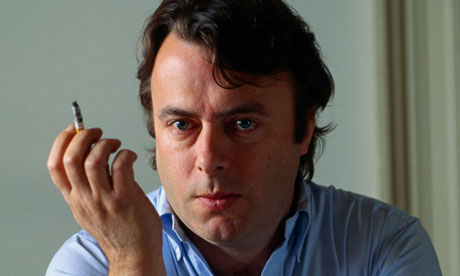
One thing I won’t say about Christopher Hitchens: RIP.

To a man as combative as he was, that would amount to a curse. Wherever he is now, he isn’t resting. And he wouldn’t want to be.

It’s all a guess where we go after this; he’d have said (in fact he did say, quite often) nowhere. I saw him make this point in person a couple of years ago, thanks to my friend Derek, who took me to see him at the University of Central Florida, debating the existence of God with Dinesh D’Souza. If there’s a more absurd topic to be debating, I can’t imagine it, but that ultimately didn’t matter. This was a show, and it was like watching a phlegmatic old bulldog facing down a yipping little terrier… the bone they were fighting over was much less interesting than the clash of style and personality.

Arriving at the stadium that night, I noticed a large number of buses in the parking lot. They were from local megachurches — the faithful had come, it seemed, to provide a cheering section for D’Souza. Or for God, I suppose in case He happened to be behind at half time. They filled the stands, row after row of earnest white people in sweaters, and at first I was a little nervous for Hitch.

I needn’t have been. The evangelicals were polite to him — they cheered and applauded whenever D’Souza made a point, but they listened to Hitchens thoughtfully and without making rude sounds. For my own part, I disagreed with everything Hitchens was saying, probably as strongly as they did. I’m no atheist. But this wasn’t a man you would dream of heckling. He didn’t mind standing in front of hundreds of people and calmly asserting they were full of shit. In fact, he obviously relished it. Hitchens had an intellect as sharp as a rapier, but he wielded it like a baseball bat.

Dogmatic, arrogant, intolerant, opinionated, often plain wrong and insistent about it. And yet, it was impossible to hate him, or even dislike him. You had to respect his intelligence and his eloquence, but it wasn’t just respect he inspired. He was lovable. He wore his vices beautifully, for one thing: he was an unapologetic smoker, drinker, and  hellraiser. His opinions, even the most provocative ones, were rooted in principles: honesty, freedom, fairness, honor. He may not have been at peace with the world, particularly its fools and scoundrels, but he was at peace with himself. He had a sense of humor, and it was large, inclusive and self aware. He suffered, as we all do, but he never used his suffering for the purpose of self aggrandizement. Instead it made him more reflective, more vulnerable, more human.

He faced his own death bravely and unflinchingly, without flourishes or drama. Some speculated he might experience a deathbed conversion from atheism, a suggestion he waved away with practiced loftiness. He was deeply rooted in this world, in his own time and in the present moment. He was awake; he was, more than anything, alive. His disbelief in God as much of the world conceptualizes Him was really beside the point. To me personally, god is an energy, a force, a power. And Christopher Hitchens embodied it.

Season of Glass

gun

“A lot of us are looking for fathers. Mine was physically not there; most people’s are not there mentally and physically, always at the office or busy with other things. So all these leaders are substitute fathers, whether they be religious or political. All this bit about electing a President. We pick our daddy out of a dog pound of daddies. This is the daddy that looks like the daddy in the commercials. He’s got the nice gray hair and the right teeth and the parting’s on the right side. This is the daddy we choose. The political arena gives us a President, then we put him on a platform and start punishing him and screaming at him because Daddy can’t do miracles. Daddy doesn’t heal us.”

These words, as timely today as they were 30 years ago, are John Lennon’s. They’re from an interview he gave to Playboy in November of 1980. I grabbed it off the stands on December 8 and took it to work to read. I could read a 20,000-word Playboy interview at work because I was the 22-year-old night stockman at a department store, with no duties except being on call to carry TV sets out to people’s cars. Other than that I sat in the basement, usually drinking beer and finding other highly antisocial ways to amuse myself. Like reading Playboy.

The interview was Lennon’s first major statement in many years. He had just emerged from five years of hibernation—five years in which rock and roll had never been worse. The mellow singer-songwriter vibe of the early 70s had turned slick and hollow; disco had come along and provided the death knell. There were signs of hope on the edges thanks to Elvis Costello, The Clash, The Police, and a few others, but what many of us were waiting for was Lennon to come back and lead the way.

He had other ideas. Double Fantasy, the new album, was actually a showcase for Yoko. The B-52s song Rock Lobster was a big hit around that time, and Lennon thought it was a ripoff of Yoko’s style: wild guitars mixed with warbled screaming. He thought her time had come. Like many other powerful men throughout history, he wanted his wife to be his equal on the public stage, whether the public wanted her there or not. Yoko was part of the interview too… I read past her parts impatiently. What did Lennon have to say, that’s what mattered. I was about halfway through reading it when the phone rang.

“Lennon’s been shot,” said my friend Gary.

What? No he hasn’t. He’s right here, talking to me. I ran upstairs to the electronics department. In the TV section, a wall of sets, maybe 100 or more screens, all tuned to Monday Night Football. I arrived just in time to see hundreds of Howard Cosells in their blue blazers and toupees, all solemnly intoning that Former. Beatle. John. Lennon. Had. Just….

I made my way home, somehow. Talked to Gary again, briefly. His voice was hollow. Turned on the radio. The late night deejays were as messed up as I was. They played every one of his songs, and the best were the really obscure ones. Angela. New York City. Nobody Loves You When You’re Down and Out. I sat staring at the poster from Imagine. It showed John at his white grand piano in his white room in Tittenhurst Park, his big white mansion in England. This poster was the only decoration in my all-white room. Needless to say, I’d gotten into John lately. So I sat and listened through the night, crying my bitter and uncomprehending tears. The world was crying with me, but that was very little comfort.

The next weeks brought the usual celebrity death orgy, with wall to wall coverage and endless footage and canned, lifeless tributes. The song Imagine, once a pleasant little wisp of cotton candy idealism, became a dirge, and unlistenable. Meanwhile, nobody talked about guns… how ridiculously easy it is to get them in this country, even if you’re a schizophrenic and off your medications. No, no, no talk about anything real, or what we can do in a practical way to make the world a saner and safer place. Gun control? No, just dirges and crocodile tears.

After a couple of days, I remembered something Lennon had said in the interview.

“It’s better to fade away like an old soldier than to burn out. I don’t appreciate worship of dead Sid Vicious or dead James Dean or dead John Wayne. What do they teach you? Nothing. Death. I worship the people who survive. Sid Vicious died for what? So that we might rock? I mean, it’s garbage, you know. No, thank you. I’ll take the living and the healthy.”

So I took down the poster and folded it back up. Stopped listening to Lennon. Tried to move on, although there was still an aching hole in my heart, and an overwhelming sense of loss. Not for a man, exactly, but for the whole beautiful dream of the 60s, which I had just missed and which I suppose I’d been hoping would flower again in my twenties. This despite the recent election of cowboy actor Ronald Reagan, a daddy figure many people found very appealing and who fired a few bullseyes straight into any notion of idealism. My generation, to put it mildly, would not be so fortunate.

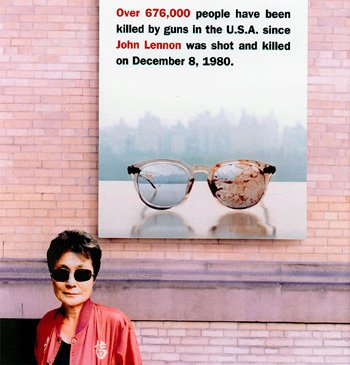
A few months later, Yoko put out an album called Season of Glass. It had a photo on the cover taken inside the Dakota, looking out over Central Park. John’s blood-splattered glasses sat on a table in front of the window. She wanted to show the violent, sickening reality of how he died and many people recoiled, as usual, from her directness. But as it turned out, the album was a blistering, heartbreaking, all-stops-out tour of the grieving process. By turns tough and achingly vulnerable, always revelatory, often gorgeous.

Fearlessly opening up her heart, she was everything Lennon always said she was. An earth mother. A goddess. A major artist. And she did what all great artists do: she made an intimate connection with me that healed my wounds and made me stronger somehow. Daddy doesn’t heal us… but it seems sometimes Mother can.

Season of Glass is as great as any Beatles album, maybe greater, but the world, busy merchandising its worship of dead John Lennon, didn’t even notice. Thirty years on, nothing has changed. I cringe in anticipation of the anniversary tributes coming this week. Imagine will be played on a loop; gun control won’t even be mentioned. I’ll be avoiding the whole thing as much as possible.

I worship the people who survive. I’ll take the living and the healthy.

Happy Xmas, Yoko.

At the Rally to Restore Sanity

Went to DC last weekend for the Rally to Restore Sanity. We knew it would be a big crowd, so rather than taking the Metro, Miranda, Ryan and I walked the two and a half miles from her townhouse down Pennsylvania Ave. to the Mall. It was Saturday October 30, a perfect Fall day with a cool morning breeze that sent a few early leaves scattering around us. We had arranged to meet Phil and Nancy at the Sculpture Garden, and then the plan was to find Steve and Mark, who were already close to the stage. But by the time we got to the Rally itself, we found it impossible to meet up with anyone: there was no cell reception. Two hundred thousand other people were on their devices too, and the grid went down.

As we looked around for a spot to watch from, the crowd continued to grow more dense. At first, many people had staked out little bits of territory with comforters and lawn chairs. Gradually these disappeared as we were all pushed inexorably closer and closer together. Picnic blankets were trampled upon. Lawn chairs were pulled tight. People who had been sitting were forced to stand. By the time the Rally started, we were so wedged in that you literally could not clap unless you raised your hands in the air above you. Fortunately it was the most mellow, good humored group you can imagine. Liberals, of course. We don’t even get mad when you trample our blankets.

At one point, an elderly lady collapsed near us and people began shouting “Medic!” Ryan, who is a nurse, took off immediately toward her. The unmovable crowd miraculously parted for him. She was fine, as it turned out. But you could feel everyone’s jittery collective physical discomfort at being so jammed in. I’ve never been anxious in a crowd before. Thanks to yoga and meditation I knew enough to breathe every time I felt resistance arising. But I couldn’t really see anything. Tiny bits of stage and edges of jumbotrons. Signs on sticks above heads. Mylar balloons. Tops of heads. So I mostly listened. As it turned out, that was fine.

The people behind The Daily Show are pretty clever. Just as the show is a parody that skewers the pompous cliches of TV news programs, the Rally was a parody of a rally. There was a rambling, self contradictory benediction (from Father Guido Sarducci, an inspired choice). Lots of failed chants and goofy singalongs. Awards, tributes and guest speakers. Most of the jokes were good, and everything was geared to support the same message: that we all have to drop the conflict and the name calling if we want to solve our problems. Of course, there was a false equivalency drawn between the right and the left… one side is clearly more angry, divisive and hateful than the other, and I bet you know which side I mean. However, the overall point was well taken: meet your opponent’s anger with some humor, and let’s all see if we can bring it down a notch.

The day before, Phil had been kind enough to invite me to join him and Nancy on a tour of the Capitol he’d arranged through some former Poli Sci students of his from his classes at UCLA and Pepperdine. It was sweet and kind of moving to watch these two smart, accomplished, powerful people wandering like wide-eyed kids, absorbing these fascinating little details and the huge historic backdrop to it all. We started out in one of the Senate office buildings, where we got a behind-the-scenes look at the ornate offices and venerable hearing rooms — including the room that held the hearings on the Titanic, Army/McCarthy, organized crime, Watergate, and Iran/Contra… hearings I’d actually watched live (only the last two, thankyouverymuch).

We went to the “crypt” in the bottom of the Capitol, where a marble compass in the floor marks the very center of the city and the point from which the four neighborhoods (NW, NE, SW, SE) all begin. We stood in the Rotunda, this awe-inspiring space with beautiful sunlight pouring down through the Dome’s arching windows… ringed with giant Trumbull paintings and marble statues of the most admirable figures of U.S. history (plus a bronze replica of Reagan somebody snuck in). We also sat in the House and Senate galleries, looking down into those little chambers where some of the noblest words in American history, and some of the stupidest, have been spoken. Just outside the gallery entrances, the tile is visibly worn down and discolored from two centuries of the people walking in to watch their representatives at work.

The highlight of this tour was a half hour we spent in the Budget Committee’s chamber with a gentleman named Chris who manages the office budget process. Chris came to DC as an intern during Watergate, intending to stay a summer or so… he’s been there for 36 years. Soft-spoken, friendly, and articulate. In response to Phil’s question he talked about the decline in civility and comity that he’s witnessed over the past three decades. In the past, congressmen used to debate heatedly and then go hang out after work — they were personal friends and could work together when they needed to. Now more and more, only ideologues get elected. He’s worried about the future and what will happen after he retires in a couple of years.

What he takes comfort from, he said, is the young people. And with good reason: they were awesome. They were everywhere, working as aides and pages and office assistants, all of them professional, bright, and idealistic. Together with the older people we saw, we got a clear picture of the Congress at work — and it’s far from the grotesque caricature offered by the cynical operatives who want to advance corporate power by making people give up on their government. It’s a lot of savvy people working very hard, people who understand the responsibility that comes with power, people who aren’t sitting home in their barcaloungers complaining, but are busy getting things done.

After the Rally and dinner, Phil and Nancy and I walked around the White House — luminous in the floodlights, and home at this particular fortunate moment to a calm, wise and potentially great man. Then we went next door to the Round Robin bar in the Willard hotel. The bar is right off the lobby and is said to be the place where the term “lobbyist” was coined. It’s a tiny little round room ringed with sketches of its more illustrious patrons: Walt Whitman and Mark Twain among them. We had to stand at the bar until John Hodgman and his date vacated their table. So we sat and had martinis like a couple of grownups and toasted to DC and to our little reunion. Until this weekend, I hadn’t seen Phil in 20 years… we’ve had some longstanding, difficult and extremely painful conflicts in our time. But we finally reached across the aisle, so to speak, and recognized the things that connect us are stronger than those that divide us. I hadn’t expected to, but I told him I loved him. He looked surprised; he said the same. Our old issues seemed very far away, like some debate between Hayne and Webster on the Senate floor in 1830… and I bet those dudes went out for drinks afterwards. After I put Phil and Nancy into a taxi I walked out into the clear, crisp Washington evening and thanked the stars over my head for letting me outlive my youth.

There’s going to be the usual ruckus these next few weeks as the gloriously ascendant tea partiers come crowing and clucking into power. The wheel turns, and always some new bunch of people think they’re going to take charge and change everything. But real change takes time, and perseverance, and a willingness to accept and work with other people rather than shutting them out. You have to let go of your grievances, and your need to be right. Compromise has somehow become synonymous with failure, but it’s what our whole beautiful system is built on. And compromise starts with seeing past your own narrow point of view. It’s not the other guy who needs to change, it’s you. If you really want to restore sanity, a rally isn’t going to do it. You have to start with your own.

I Have Sold Your Facebook Data

I suppose you’ll call this a confession. But that would imply some kind of remorse, and I have to say, I feel pretty good. Probably the money helps.

No, it’s because we’re friends — Facebook friends, and you’ll agree with me that’s a pretty elastic term — that I feel I owe you full disclosure. So here goes: I have sold your personal data to a variety of extremely interested and apparently deep-pocketed marketing firms.

Look, it’s a trend. And all my life, I’ve gotten into these things too late. The dot-com frenzy, remember that? I invested in my first startup in late 2001. Cautious, I guess. Well not this time. There are lots of people out there who want to know about you, my Facebook friends. How many Twilight books you’ve read, or about the interesting fact that you’re Jewish but also a Tea Partier, or that you recently joined a drum circle. And let’s just be honest. If I don’t tell them, someone else is going to do it and cash in bigtime.

Some of you are much younger than me. I see that you have over a thousand friends, and it makes me shake my head. Here’s one thing I’ve learned: in this life, you’re lucky if you can count the people who really love you on one hand. There might be a few dozen others who find you quirky, or pleasant company, or whatever. Then there’s your family and your in-laws, who are such an important part of your life, whether you like it or not.

These are the people who are really valuable, who really mean something. Why? Because you know so much more about them. What they like to eat, and read, and watch. Where they like to go out for drinks, or take vacations. Who they hang out with, do business with, vote for. Maybe even who they sleep with. These people are a goldmine… literally.

But of course now thanks to Facebook, everyone has a value. Some less than others, of course. I’m finding that there isn’t so much demand for the personal information of my better-known friends, like Apolo Ohno and the Dalai Lama. Tapped out, I guess. But you, Cute High School Girl Who Wouldn’t Give Me the Time of Day 30 Years Ago, But Now Wants to Flirt Online… bring it on, baby. Because I see you like to collect Hummels and you’re knitting another sweater. And I find that means a lot to me.

But Eddie, what about my privacy, you’re probably thinking. Well, snap out of it, because there’s no such thing anymore. Computers are recording every transaction you make and every online conversation you have, the phone company is recording your every call and text, cameras are recording every move you make outside your house. Take comfort in the fact that amid all those huge reams of data, you’re actually kind of anonymous unless you do something unusual or interesting. And again, addressing my younger friends, you’ll find yourself doing fewer and fewer of those as time goes by anyway.

One last thing. I guess it’s only fair that you should be able to market my information too. I’ve adjusted my “privacy settings” accordingly, but if you want a quick summary, I’m in my early 50s, have a college degree, purchase top-shelf liquor, collect classic movies on DVD and donate to film preservation, enjoy yoga and meditation, have recently gotten into gardening — and after a few slow years, my personal income is rising again. But then you already knew that last part.